Ship direct to you $25 Perth Metro

What Makes a Good Bull Bar for Your 4×4?
A bull bar is one of the most important upgrades for any 4×4 enthusiast in Australia, especially in places like Perth where kangaroo strikes and tough off-road conditions are common. A quality bull bar not only protects your vehicle’s front end from animal strikes and obstacles but also serves as a platform for mounting recovery gear, lights, and other accessories. But what exactly sets a good bull bar apart from the rest? Below I break down the key features and answer common questions to help you choose the best bull bar for your needs.
Winch Compatibility and Integrated Winch Cradle
Winch-ready design is a hallmark of a high-quality bull bar. A winch cradle is a reinforced mounting plate or housing built into the bull bar where a winch can be installed. Having an integrated winch cradle is hugely beneficial. It means the bar is designed to handle the stress of winching, and you won’t need to fabricate or attach a separate winch mount later. In fact, many steel bull bars let you bolt a winch straight in as part of the design, whereas alloy or plastic bars often don’t allow for winch mounting.
A bull bar with a built-in winch cradle is “winch compatible”, often supporting standard winches (such as up to 10,000–12,000 lb capacity). This not only gives you the option to add a winch for self-recovery, but it also indicates the bull bar’s overall strength. For example, a modern quality made bar will have an integrated cradle rated for at least 12,000 lb winch as part of its mounting assembly. In short, if you plan on any serious off-roading or remote touring, choose a bull bar with an integrated winch mount so you’re prepared for recovery situations. You don’t need a winch… until you really need one!
Integrated Fog Lights, Indicators and DRLs
Lighting is another area where the best bull bars shine (literally). Top-tier bull bars often include integrated LED fog lights, indicator lights, and daytime running lights (DRLs) built right into the bar. These built-in lights improve visibility and keep your vehicle road-legal. They also give a neat, factory-finished look compared to adding aftermarket lights externally. Many premium bars built in LEDs for turn signals and fog lamps. For instance, Hamer 4×4 bull bars come with four integrated LED lights – fog lights, DRLs, position lights and indicators – all seamlessly incorporated into the bar. Integrated lighting means less hassle with installation and a cleaner appearance, since the lights are protected within the bull bar’s design. It also ensures your front indicators and park lights remain clearly visible for safety and compliance. When shopping, look for bull bars that advertise included fog lights, DRLs and indicators. Improved lighting is a big plus for nighttime off-roading and poor weather conditions.
Rated Recovery Points (Integrated vs. Bolt-On)
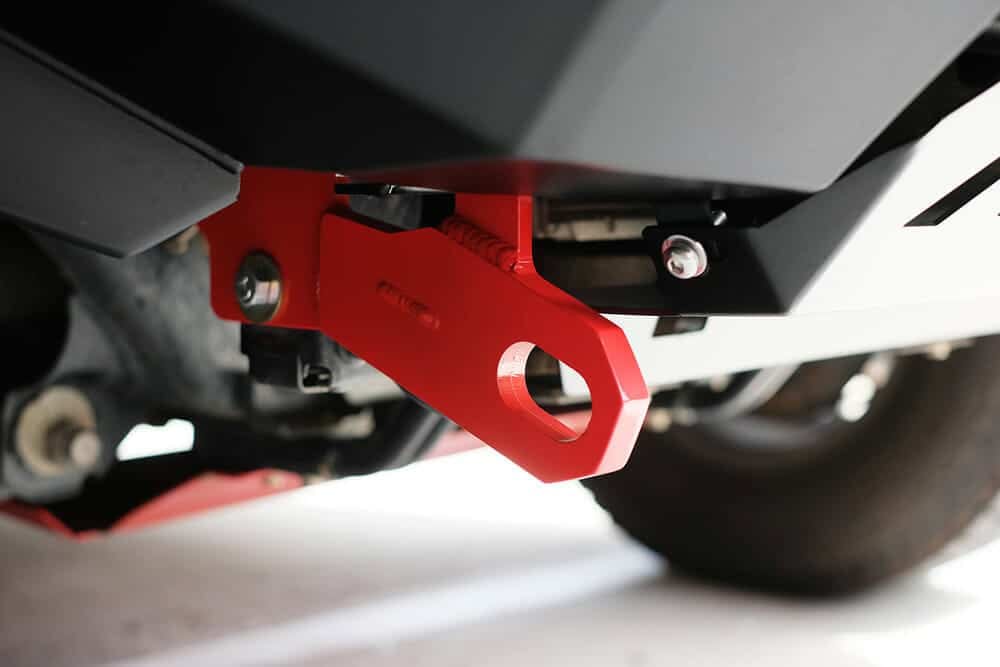
Anyone who goes off-road should have rated recovery points on their vehicle – sturdy attachment points for tow straps or shackles when you need to be pulled out of trouble. A good quality bull bar will include integrated recovery points (often red or yellow painted hooks or eyes) that are part of the bar’s structure and welded or bolted to the chassis mounts. Lesser bars might require you to bolt on separate recovery hooks or may not offer them at all. Integrated 3.5-tonne rated recovery points are far superior to light-duty, bolt-on tabs. They are designed and tested as part of the bull bar system, meaning they can handle heavy snatch recoveries safely. For example, a well-engineered bull bar will incorporate a pair of rated recovery points, built right into the mounting assembly.
Having the recovery points built-in not only adds strength but also convenience – they’re always there when you need them, in the correct position and angle for pulling. Bolt-on recovery points, on the other hand, may not distribute force as well and can loosen over time if not part of the bull bar’s frame. Always check the rating of any recovery hook or shackle mount on your bull bar; quality bars will clearly state a Working Load Limit (like 3.5 T). In summary, integrated, rated recovery points are a must-have feature for any bull bar that’s going to see real off-road use.
Durable Powder-Coated Finish
A bull bar takes a lot of abuse from sun, mud, rocks, and weather. That’s why the finish on a good bull bar is more than just for looks – it’s about corrosion protection and durability. High-quality bull bars typically come with a powder-coated finish (often over an anti-corrosion undercoat like E-coat). Powder coating involves baking on a layer of durable paint powder, which creates a hard finish that resists scratches, chipping, and rust much better than ordinary paint. For example, Hamer bull bars use a matte black powder coat that is not only sleek but tough enough to withstand harsh environments. Similarly, other top manufacturers highlight their textured black powder-coat finishes for providing exceptional corrosion protection.
In practical terms, a good powder coat will keep your bull bar looking new longer – no unsightly rust streaks or flaking paint after a few river crossings. It’s still wise to wash off salt and mud occasionally and inspect for deep scratches, but overall, a powder-coated bull bar is low-maintenance. Some bars even have a ripple or textured finish that hides minor scuffs. A quality powder-coated bull bar will match nicely and won’t require constant polishing like a chrome or alloy bar might. The bottom line is that a tough powder coat finish is a sign of a well-made bull bar and will prolong its life.
Quality Welding: Full Welds vs. Tack Welds
The strength of a bull bar heavily depends on its construction technique. Pay attention to how the bull bar is welded together. Full-length welds (continuous weld beads along all seams) are far stronger and more rigid than a few spot welds or “tack” welds. In a high-quality bull bar, all critical joints are fully welded, often both inside and out, to create a one-piece structure. This ensures the bar can withstand impacts and the strain of recoveries or winching without coming apart. Some cheaper bars might only use minimal welds or bolts at certain joints, which can lead to flex or failure under stress.
For maximum durability, look for descriptions like “fully welded one-piece construction.” These continuous welds give the bull bar a rigid backbone. In contrast, tack welds or partial welds are not sufficient as structural bonds – so a bull bar that isn’t fully welded at the seams could be a red flag. Always choose a bar from a reputable manufacturer that prides itself on welding quality. The welds should appear consistent and cover the entire joint, not just intermittent spots. Full welds = full strength, ensuring your bull bar won’t crack at the seams when the going gets tough.
One-Piece vs. Flat-Pack Assembly
Along with welding, consider whether the bull bar comes as a one-piece unit or a multi-piece kit. High-end bull bars are usually one piece design that’s ready to bolt straight onto the vehicle. Some lower-end or mail-order bars come in multiple pieces (sometimes called flat-pack or DIY bull bar kits) a bolt-together kit might save on shipping or cost, but it often sacrifices some strength and precision. One-piece bull bars are preferred because they are engineered as a unified structure with no assembly joints that could introduce weakness or vibration. They maintain perfect alignment of all mounting points, making installation easier and fitment more precise.
By contrast, a bull bar that you assemble with brackets and bolts can be prone to loosening hardware over time, especially with the vibrations of corrugated roads. Each bolted joint is a potential point of flex or corrosion. That’s why most top manufacturers supply their bull bars fully formed and welded. In short, I recommend one-piece bars over “flat-pack” multi-piece bars for the best durability and hassle-free setup. When browsing, phrases like “one-piece design” or “fully welded construction” are what you want to see (as opposed to a dozen pieces and a bag of bolts).
Other Signs of a High-Quality Bull Bar
Beyond the big-ticket items above, there are a few more things to look for when evaluating bull bars:
- Airbag and ADR Compliance: In Australia, a good bull bar must be ADR approved and airbag compatible. This means it has been tested not to interfere with your vehicle’s crash safety systems. Always verify that the bar is certified for your 4×4 model, ensuring your airbags will still deploy correctly in a collision. Hamer bull bars, for instance, are fully ADR compliant and designed to work with factory airbag sensors.
- Vehicle Specific Fit: Quality bull bars are model-specific, matching the contours of your 4×4 and mounting to factory points. This not only looks better but ensures that features like parking sensors, front cameras, and radar continue to function. The best bars support relocation or integration of these sensors so that modern driver aids are not hindered.
- Material and Thickness: Premium bull bars use high-grade steel (often 3mm thick or more) for maximum strength. Steel is preferred for rugged use, while alloy/aluminum bars save weight but may incorporate steel for critical parts (for example, an aluminum bull bar with a steel winch cradle for strength). Avoid very thin steel or unknown alloys that could dent easily.
- Design and Coverage: Look for a design with upswept wings for better approach angles off-road, and consider whether you want a looped style (for headlight protection) or a sleeker bumper style. A well-designed bar should protect vital components (radiator, grille, headlights) without being overly bulky or reducing ground clearance.
- Extra Mounting Points: Little features can make a difference. Does the bar have high-lift jack points? Are there welded tabs for driving lights or antenna mounts? Are the winch access points and number plate position thoughtfully designed (some bars include flip-up number plate brackets for winch access)? These details show the manufacturer knows the real-world use of their product.
In summary, a good bull bar is strong, well-built, and purposefully designed for both protection and utility. Brands like Hamer 4×4 exemplify this by including integrated winch mounts, LED lights, rated recovery hooks, full welding, and durable coating in their bull bars.
A good bull bar is an investment in your 4×4’s safety, capability, and style. Whether you’re a beginner looking for weekend adventure around Perth or an experienced off-roader tackling the outback, pay attention to these features when choosing your bull bar. Prioritize strength (material and weld quality), functionality (winch mount, recovery points, lighting), and compliance. Brands like Hamer 4×4 have set a high standard by incorporating all these elements, which is why we recommend them for those seeking the best bull bars in Perth. Equip your 4WD with a quality bull bar and you’ll be ready for anything the road or trail throws at you – with confidence and style.